
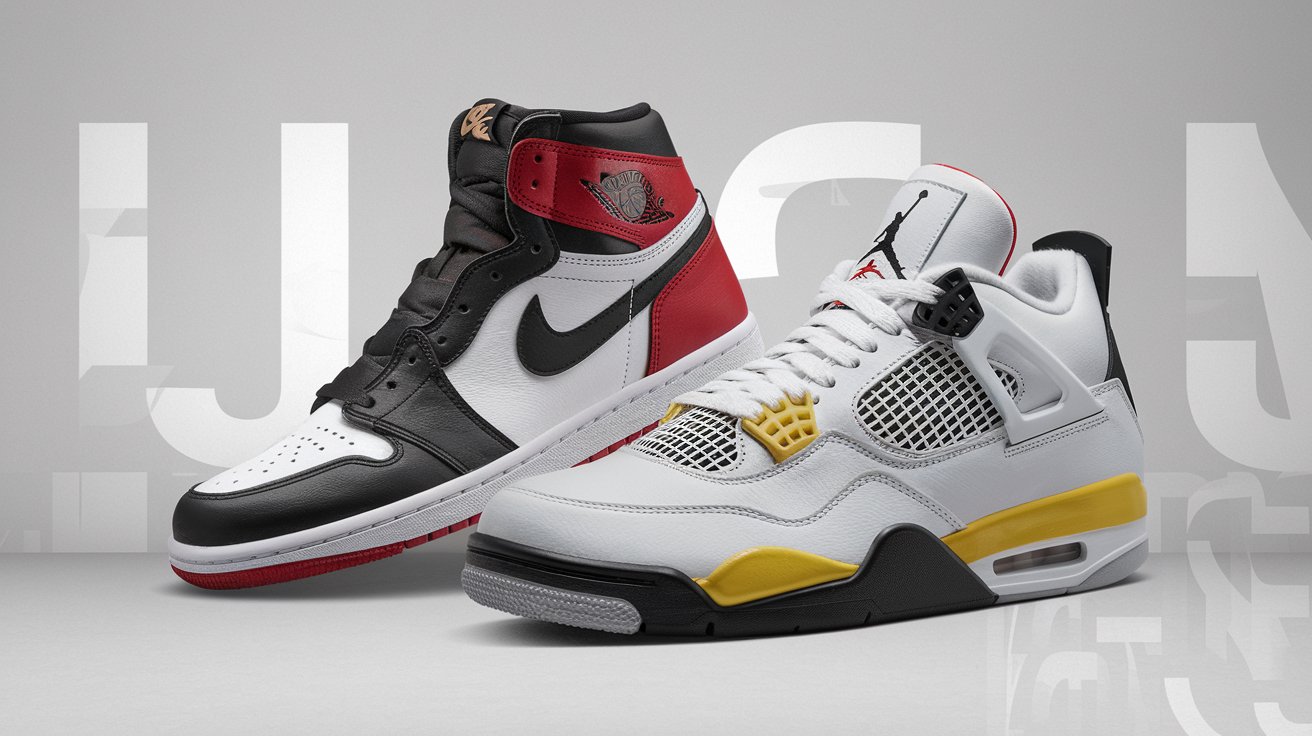
The debate between Jordan 1 vs Jordan 4 remains one of the most discussed topics among sneaker enthusiasts in 2025. Both iconic silhouettes offer distinct advantages, with the Jordan 1 representing timeless basketball heritage and the Jordan 4 delivering premium comfort with modern technology. This comprehensive comparison examines fit, styling versatility, pricing, and overall value to help you make the right choice for your collection.
Design and Aesthetic Differences Between Jordan 1 and Jordan 4
The Jordan 1 design embodies minimalist basketball heritage with its clean leather upper and simple colorway execution. Released in 1985, this silhouette features a high-top construction with the iconic Wings logo and maintains the original basketball shoe DNA that made Michael Jordan famous. The design philosophy prioritizes simplicity and timeless appeal over technical innovation.
In contrast, the Jordan 4 aesthetic represents evolution in sneaker design with distinctive mesh panels, visible Air cushioning, and plastic wing eyelets. Introduced in 1989, the Jordan 4 showcases more complex construction with layered materials and advanced manufacturing techniques. The signature cage-like plastic wings and heel tab create a more aggressive, performance-oriented appearance that appeals to modern sneaker culture.
Material Construction Analysis
The Jordan 1 construction utilizes premium leather uppers with minimal synthetic materials, creating a break-in period that eventually molds to your foot shape. The leather quality varies significantly between retro releases and original equipment manufacturer versions, with 2024-2025 retros featuring improved leather compared to previous years.
Colorway Versatility Comparison
Jordan 1 colorways offer superior versatility for casual wear, with classic combinations like Chicago, Bred, and Royal easily matching various outfits. The Jordan 4 colorways tend toward more complex color blocking and technical aesthetics, making them statement pieces rather than everyday versatile options.
Fit and Sizing Comparison: Jordan 1 vs Jordan 4
Understanding Jordan 1 vs Jordan 4 sizing is crucial for online purchases and collection building. Jordan 1 sizing runs true to size for most foot shapes, with the leather upper providing minimal stretch over time. The toe box offers adequate room for normal foot width, though wide-foot wearers may need to size up half a size for optimal comfort.
The Jordan 4 fit presents a more complex sizing scenario due to its layered construction and plastic reinforcements. Most sneaker enthusiasts report that Jordan 4s run slightly smaller than Jordan 1s, with the cage construction creating a more restrictive fit around the midfoot. The mesh panels provide some breathability but limited stretch accommodation.
Width Considerations for Different Foot Types
Wide-foot wearers consistently report better experiences with Jordan 1 width accommodation compared to the Jordan 4’s narrower profile. The leather construction allows for natural expansion over time, while the Jordan 4’s plastic wings maintain their rigid shape regardless of wear duration.
Breaking In Period Differences
The Jordan 1 break-in period typically requires 15-20 wears for optimal comfort, with the leather gradually softening and conforming to foot shape. Jordan 4s require minimal breaking in due to their pre-shaped construction, offering immediate comfort but less personalized fit development over time.
Comfort and Performance Analysis
The question Are Jordan 4s uncomfortable frequently appears in sneaker discussions, with mixed responses depending on individual foot characteristics and usage expectations. Jordan 4s feature visible Air-sole cushioning in the heel and forefoot, providing superior impact absorption compared to the Jordan 1’s basic midsole construction.
Jordan 1 comfort relies primarily on the leather upper’s ability to mold to your foot shape over time, with minimal technological cushioning support. The flat rubber outsole provides basic court traction but offers limited impact protection for all-day wear or athletic activities in 2025 standards.
Styling Versatility: How to Wear Jordan 1 vs Jordan 4
The Jordan 1 styling versatility surpasses most sneaker silhouettes due to its clean, minimalist design that complements various fashion aesthetics. Classic colorways pair seamlessly with jeans, chinos, shorts, and even business casual outfits when styled appropriately. The high-top silhouette works particularly well with cropped pants and no-show socks for modern streetwear looks.
Jordan 4 styling requires more deliberate outfit coordination due to its technical appearance and complex colorways. The chunky silhouette works best with relaxed-fit jeans, joggers, or cargo pants, creating a balanced proportion. The aggressive design elements make Jordan 4s statement pieces that anchor streetwear-focused outfits rather than subtle additions to various styles.
Professional and Casual Environment Suitability
Clean Jordan 1 colorways like All White or subtle leather options can work in creative professional environments, while Jordan 4s remain strictly casual due to their athletic-forward design language and technical material usage.
Seasonal Wear Considerations
The Jordan 1 leather construction provides better temperature regulation and durability across seasons, while Jordan 4 mesh panels offer superior breathability in summer but less weather protection during colder months in most United States climates.
Price Analysis and Value Proposition in 2025
The question Why is Jordan 4 expensive reflects the complex manufacturing process, premium materials, and limited production runs that characterize most Jordan 4 releases. Retail prices for Jordan 4 retros typically range from $210-$250 in 2025, with popular colorways like White Cement and Bred commanding higher resale values immediately after release.
Jordan 1 pricing varies dramatically based on colorway popularity and leather quality, with basic colorways retailing around $170-$200 while premium versions like the Chicago and Bred colorways reaching $200-$220 at retail. The Jordan 1 value proposition often provides better long-term investment potential due to broader market appeal and timeless design elements.
Cultural Impact and Popularity Factors
Understanding Why are Air Jordan 1 so popular requires examining both historical significance and contemporary cultural relevance. The Jordan 1’s association with Michael Jordan’s early NBA career, combined with the legendary story of the NBA’s initial ban, created a mythology that transcends sneaker culture. The simplicity allows for easy customization and appeals to both vintage enthusiasts and modern sneaker collectors.
Jordan 4 popularity stems from its appearance during Michael Jordan’s championship runs and association with Spike Lee’s Mars Blackmon character in Nike commercials. The technical design elements appeal to sneaker enthusiasts who appreciate innovation and craftsmanship, while limited colorway releases maintain exclusivity and desirability within sneaker communities.
Social Media and Influencer Impact
The Jordan 1 social media presence dominates platforms like Instagram and TikTok due to photogenic qualities and outfit coordination ease, while Jordan 4s appeal more to dedicated sneakerheads who appreciate technical design details and rare colorway releases.
Celebrity and Athlete Endorsements
Both silhouettes maintain strong celebrity endorsement presence in 2025, with Jordan 1s appearing more frequently in casual celebrity outfits and Jordan 4s showcasing in performance and streetwear contexts among professional athletes and musicians.
Women’s Specific Considerations: Jordan 1 vs Jordan 4
The Jordan 1 vs Jordan 4 women’s market shows distinct preferences based on styling versatility and fit characteristics. Women’s Jordan 1 releases often feature exclusive colorways and sizing that accommodates different foot shapes, with the streamlined silhouette complementing various fashion aesthetics from athleisure to street style.
Women’s Jordan 4 releases focus on lifestyle colorways with softer color palettes and premium material upgrades, though the bulkier silhouette may not suit all personal style preferences. The technical appearance appeals to women interested in sneaker culture and athletic-inspired fashion, while the fit considerations remain similar to men’s sizing with appropriate conversions.
Durability and Long-term Ownership Experience
Long-term Jordan 1 durability depends heavily on leather quality and construction standards, with well-made pairs lasting years of regular wear when properly maintained. The simple construction allows for easier repair and restoration, making vintage pairs valuable collector items. Sole separation remains the primary durability concern after extensive wear cycles.
Jordan 4 durability faces challenges from complex material combinations and glue-dependent construction methods. The visible Air units can develop leaks over time, while the plastic wing components may crack or discolor with age. However, the advanced cushioning technology provides superior performance longevity compared to Jordan 1’s basic sole construction.
Related video about jordan 1 vs jordan 4
This video complements the article information with a practical visual demonstration.
Everything you need to know about jordan 1 vs jordan 4
Why was the Jordan 1 illegal?
The Jordan 1 wasn’t technically illegal, but the NBA initially banned the original colorway for not meeting the league’s ‘uniformity of uniform’ rule requiring primarily white shoes. Nike brilliantly marketed this ban with the famous ‘Banned by the NBA’ campaign, creating massive consumer interest and establishing the Jordan brand’s rebellious image that continues today.
Are Jordan 4s uncomfortable for all-day wear?
Jordan 4s can be uncomfortable for extended wear due to their narrow fit, rigid plastic wing construction, and firm midsole. The visible Air cushioning provides good impact absorption, but the overall design prioritizes style over long-term comfort. Breaking them in helps, but they’re not ideal for standing or walking extended periods.
Which is better for beginners: Jordan 1 or Jordan 4?
Jordan 1s are better for sneaker beginners due to their versatile styling options, easier outfit coordination, generally lower resale prices, and timeless design that won’t look outdated. The simpler construction also makes them more durable and easier to maintain compared to the Jordan 4’s complex materials and technical elements.
Do Jordan 1 and Jordan 4 fit the same size?
No, Jordan 4s typically run smaller than Jordan 1s due to their narrower construction and plastic reinforcements. Most people need to go half a size up in Jordan 4s compared to their Jordan 1 size. Always try both silhouettes in-store when possible, as individual foot shape significantly affects fit for both models.
Which has better resale value: Jordan 1 or Jordan 4?
Both maintain strong resale value, but Jordan 1s typically have more consistent demand across different colorways due to their broader appeal. Jordan 4s can achieve higher peaks for specific limited releases, but Jordan 1s offer more stable long-term investment potential with classic colorways like Chicago, Bred, and Royal consistently appreciating over time.
Can you wear Jordan 4s with business casual outfits?
Jordan 4s are generally too technical and athletic-looking for business casual environments. Their complex design elements, mesh panels, and chunky silhouette work best with casual streetwear outfits. Clean Jordan 1 colorways in neutral tones offer better versatility for semi-professional settings in creative industries.
| Comparison Factor | Jordan 1 | Jordan 4 |
|---|---|---|
| Styling Versatility | Excellent – works with multiple aesthetics | Good – best with streetwear looks |
| Comfort Level | Moderate – improves with break-in | Good – superior cushioning technology |
| Price Range 2025 | $170-$220 retail | $210-$250 retail |
| Durability | Excellent – simple, repairable construction | Good – complex materials may age faster |
| Beginner Friendly | Yes – timeless and versatile | Moderate – requires specific styling knowledge |

